
Learning Center
Reading
Plan & ask text-dependent questions
november 28, 2023
Standardized reading assessments are complex—not just in the texts students read but in the questions they face. Every text-dependent or document-based question includes two essential characteristics:
- Its answer is implied within the text but not explicitly stated. Therefore, the reader must make an inference.
- Its answer can be supported with multiple details from the passage. Therefore, the reader must provide text evidence.
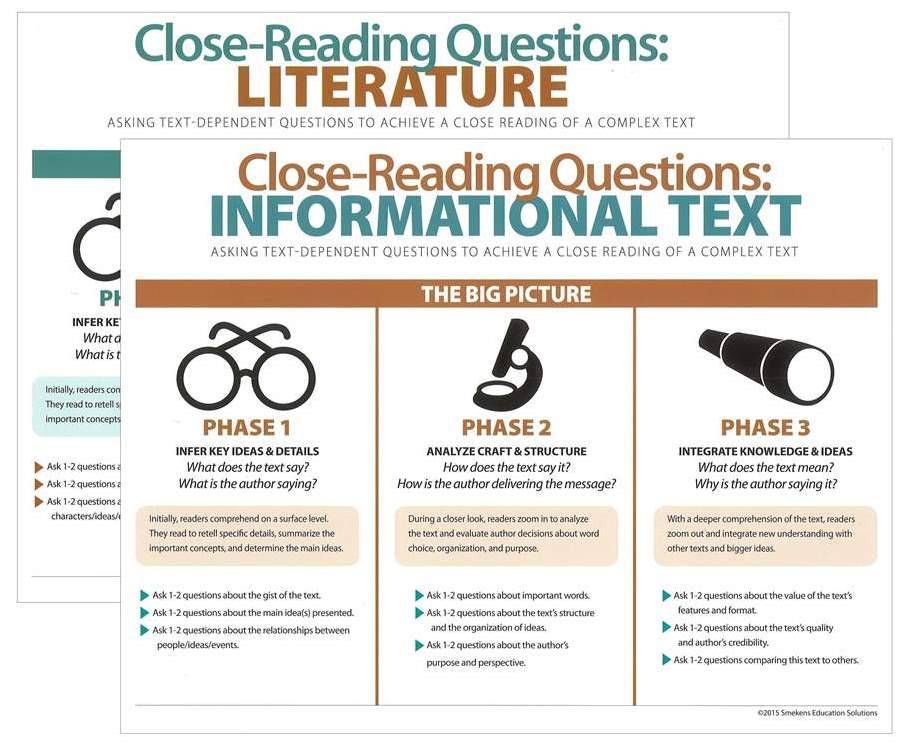 Although these inferential questions can be generated, some teachers prefer to select them from a list of options. For examples of text-dependent questions, see the set of Close-Reading Questions organized by comprehension standards.
Keep in mind this is a bank of common questions. Do not plan to ask all of the questions within a category. Rather, select only those that are relevant for the text you are utilizing. (Purchase the question set—or buy them separately: Informational Text or Literature).
Beyond planning text-dependent questions, consider the order you will ask them when reading the text with students.
Guide students to achieve a deep understanding
The first round of questions are asked during the initial reading. Pause regularly to ask students to paraphrase excerpts and summarize main points in order to comprehend what the author said.
When you want students to have more than merely a surface gist, return to excerpts and ask phase-two questions. Through text-dependent questions, guide readers to analyze the author’s choices regarding vocabulary, text structure, and perspective.
Sequence questions to support close reading
As important as what questions are asked, the teacher must also consider the sequence of questions that will increase the students’ comprehension despite the text’s complexity.
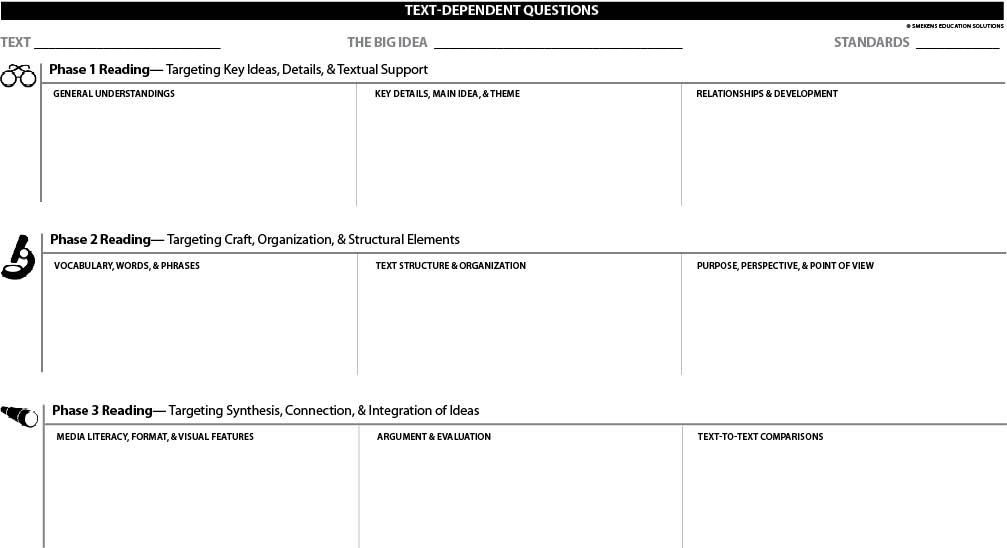
Do not sequence questions based merely on the paragraph numbers. Rather, intentionally guide the students’ thinking from a surface gist to a deep understanding. This honors the close-reading framework.
Although the questions asked in phase 2 target a higher level of reader thinking, they cannot be asked before ensuring students have a handle on the broad concepts and general ideas addressed in phase 1.
Similarly, the third tier of questions is the most complex and must be postponed until the very end. (Typically these are the last questions/prompts asked on a state reading assessment.) Such text-dependent questions require students to compare and synthesize the ideas learned in this text with others previously known.
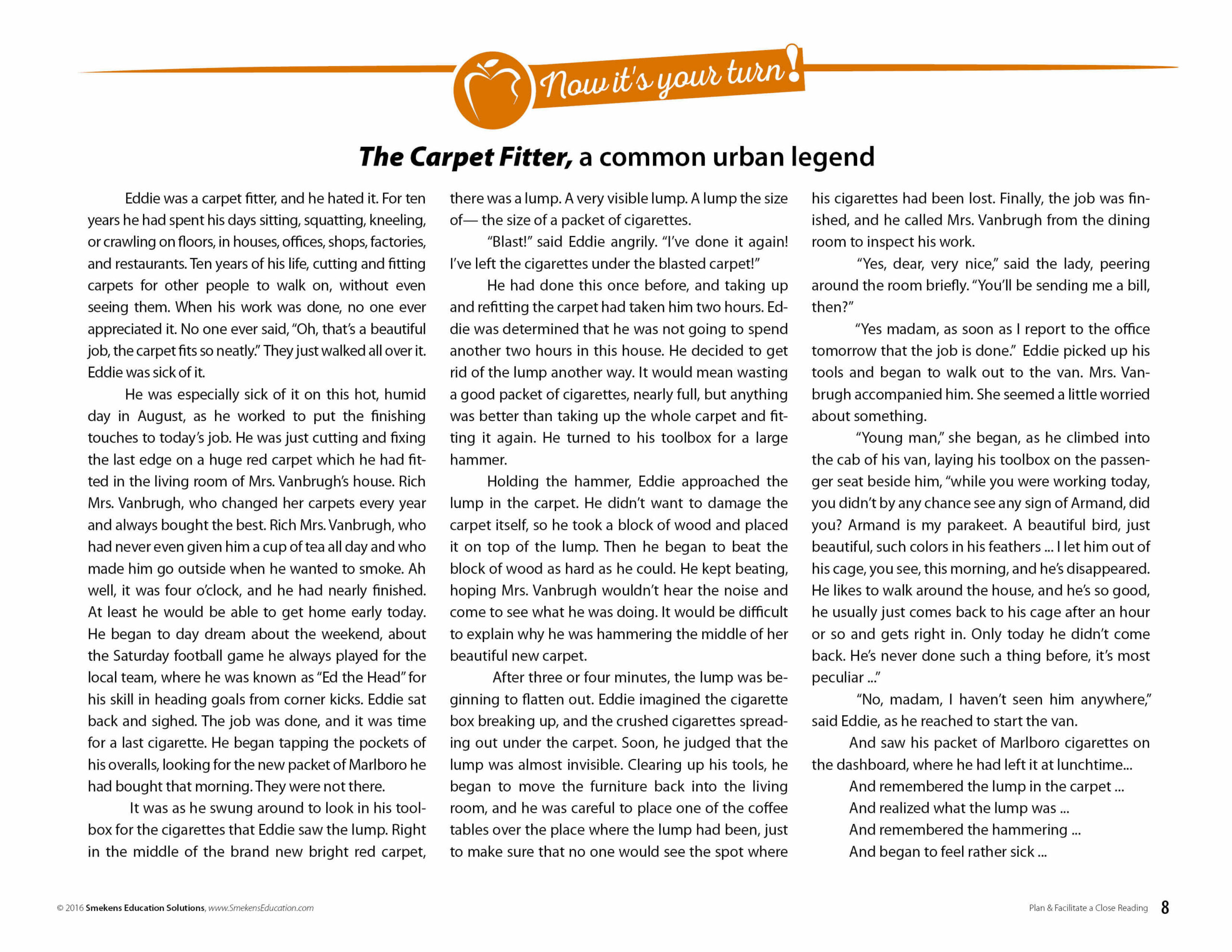
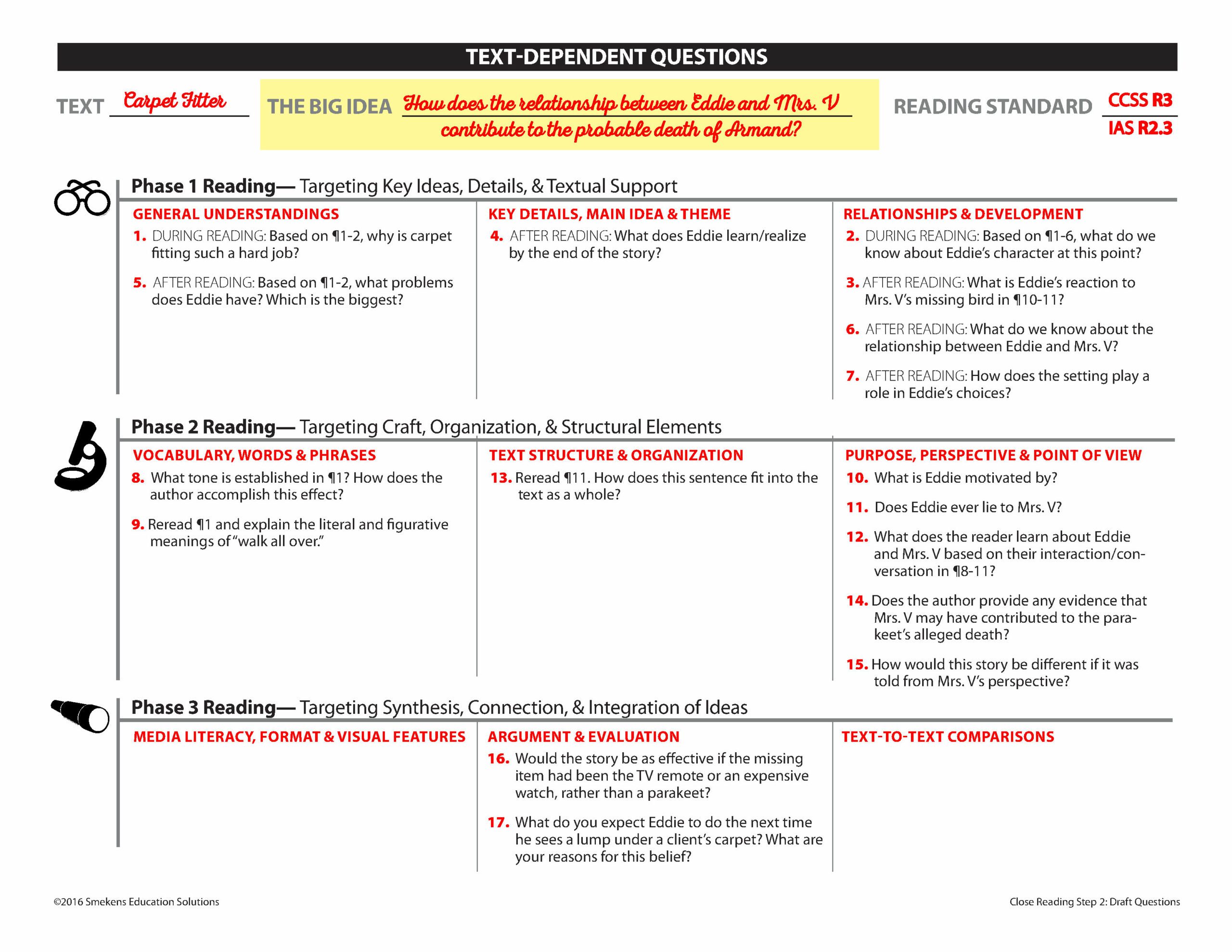
Download a sequence of text-dependent questions used during a close reading of “The Carpet Fitter.”
Avoid previewing the text
Once you have determined which questions to ask and when to ask them, consider how you will introduce the text to students.
Since close reading is applied only to complex and challenging texts, teachers often feel the need to frontload students in preparation. They tend to provide in-depth background information, a thorough text summary, and relevant vocabulary definitions.
However, part of what makes a close-reading experience significant is that it engages students in a “productive struggle.” It should be a “struggle” to understand the entire text in a single reading. It should be “productive” in that the reader’s perseverance and multiple reads lead to a deeper understanding of the text. Consequently, it’s best to minimize the traditional pre-reading activities on a close-reading day. Just get their noses in the books–just get them reading.
(DISCLAIMER: In most reading scenarios, the act of previewing a text is NOT bad or wrong. However, when facilitating a close reading of a complex text, limit this strategy.)
- Don’t hand-hold students through a page walking or provide a summary of the text. Rather, provide a few moments for them to do it independently of you.
- Don’t just tell students the definitions of unfamiliar words they will encounter in the reading. Rather provide simpler texts/sources for them to access and build their own background knowledge.
- Don’t ask students to make text-to-self connections before reading. Rather, just start reading. This keeps the focus on the author’s ideas–rather than the reader’s experience.
With minimal frontloading, the first reading of the text will not produce deep understanding. This is normal! Nobody understands everything about a complex text in the first read. That’s the whole point of the close-reading framework. It requires the reader to persevere, to reread, to dive back into the text to discover more meaning. Since a close-reading is about guiding students through the productive struggle, don’t remove the “struggle” by providing too much support before reading.

[Reading]
Master the 10 anchor reading standards with a Cheat Sheet
[Reading]
Define evidence versus just a detail
[Reading]