
Learning Center
writing
Develop acrostic poems for vocab practice
february 17, 2010

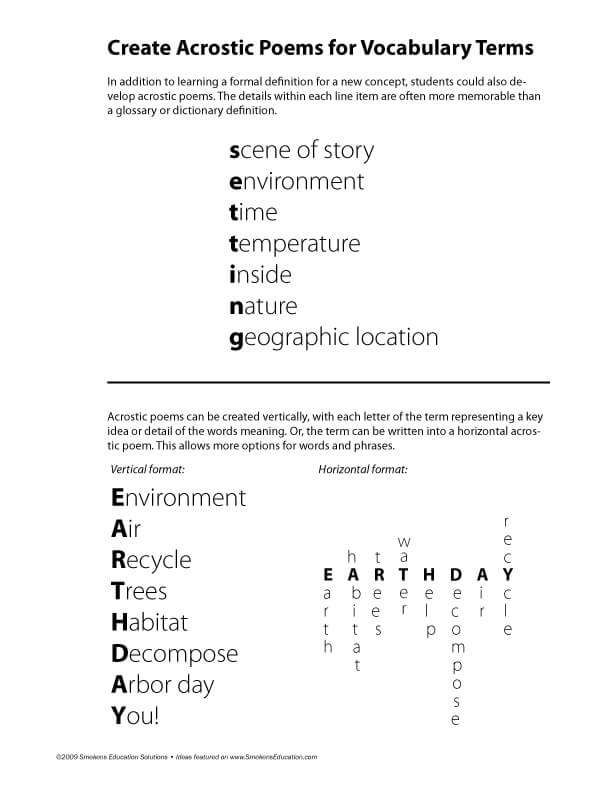
When teaching students new vocabulary words in the content areas or in language arts, one thing you could do, beyond just talking about definitions, is to have students develop an acrostic poem for that term. For example, here is an acrostic poem used in a primary classroom for the term “Earth Day” and an acrostic poem on “setting” done in an intermediate language arts class.
The kids have to know the term or the concept in order to develop a word or phrase to extend off of each letter. And for some students, it’s actually easier for them to remember what the word means when they think about what each of those letters stood for instead of some formal glossary or dictionary definition that they just memorized.
What teachers need to remember is that an acrostic poem does not have an “answer.” In other words, there’s no “right answer” per line item. There’s definitely wrong information, but the student’s not trying to guess what the teacher wants for each line; there’s lots of options. It’s for this reason that the acrostic poem is a great activity to do with students as a think-pair-share. You could select a single word and then have each student do his own individual acrostic. Then, have small groups share their results. Finally, have each small group share their best example with the whole class. It’s just a great way to review key terms.
The acrostic poem could be done vertically, the traditional way, but some teachers have played with the acrostic poems as horizontally. Now it’s more like the board game Scrabble. The word or phrase you come with has to have that letter in it somewhere–it doesn’t have to start with a particular letter. This works especially well for primary students because it gives them more options. Download acrostic poem examples.

[reading]
Assess vocabulary with cloze passages
[reading]