
Reading
Require students to listen during conversations with Talk Moves
 When facilitating whole-class conversations, every student is not always engaged. When one student has the floor, typically the others—the ones who weren’t called on—will check out and tune out.
These “discussions” often run more like a Q & A than an exchange and sharing of ideas. To change this dynamic, provide students with explicit instruction on how to engage in academic conversations using Talk Moves.
Just as the name implies, Talk Moves are different ways to participate in academic conversations. They provide opportunities for students to enter the conversation, deepen the discussion, and/or transition the thinking. This will have students leaning in to listen and respond to one another.
Begin with explicit instruction on a couple Talk Moves
Introduce 3 initial Talk Moves.
- I AGREE: Students participate by communicating they are thinking similarly to the student sharing.
- I’d like to ADD ON: Students believe the initial answer is incomplete. This concept of “adding on” may include providing another example, pointing out another reason, or developing the explanation further.
- I DISAGREE: Students take the conversation in the opposite direction by disagreeing with the initial answer. This includes sharing alternative theories, different perspectives, or known contradictions.
Talk Moves is a whole-class strategy that encourages participation, conversation, and collaboration. See it in action via this video published by The Teaching Channel.
Bridget Longmeier, Instructional Coach at Seymour Middle School (Seymour, IN), introduces Talk Moves to third graders. “This is a game changer for a school with a 60% EL population!”

Roll out the hand signals in separate lessons
When introducing each Talk Move, define its meaning and the situations it might be used in during a conversation. This gives students a chance to see the different ways the same Move can be used or interpreted. Reveal the corresponding hand signal and model it in a simple, casual conversation about everyday topics (e.g., school, lunch, friends, etc.).
Eventually, bring Talk Moves into academic conversations. Provide students with the questions the day before a formal whole-class discussion. This gives them all a chance to jot down thoughts and textual evidence ahead of time. It makes everyone feel prepared to contribute the day of the discussion.
The day of, put students into small groups to discuss their individual responses to the question previously provided. Encourage students to listen for ideas or answers—that they agree with, disagree with, or could elaborate or add on to.
An advantage of students using Talk Moves during a class discussion is that the teacher can facilitate a more organized conversation. The hand signal a student displays communicates to the teacher which student wants to add on information versus those who disagree and want to pivot the conversation.
Not to mention that the teacher knows who is engaged and how each person is thinking without calling on students with their hands up.
Introduce additional Talk Moves
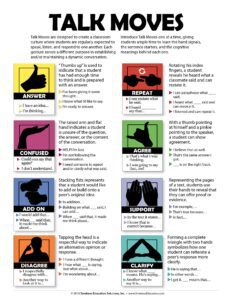
Answer, Agree, Add on, and Disagree are the basic Talk Moves. Then, depending on the age of the students and the subject matter, consider teaching a few more.
- I can SUPPORT: Students can provide textual evidence for someone’s general answer.
- I can CLARIFY: Students can restate what a peer initially said, making the point more clear for the rest of the class.
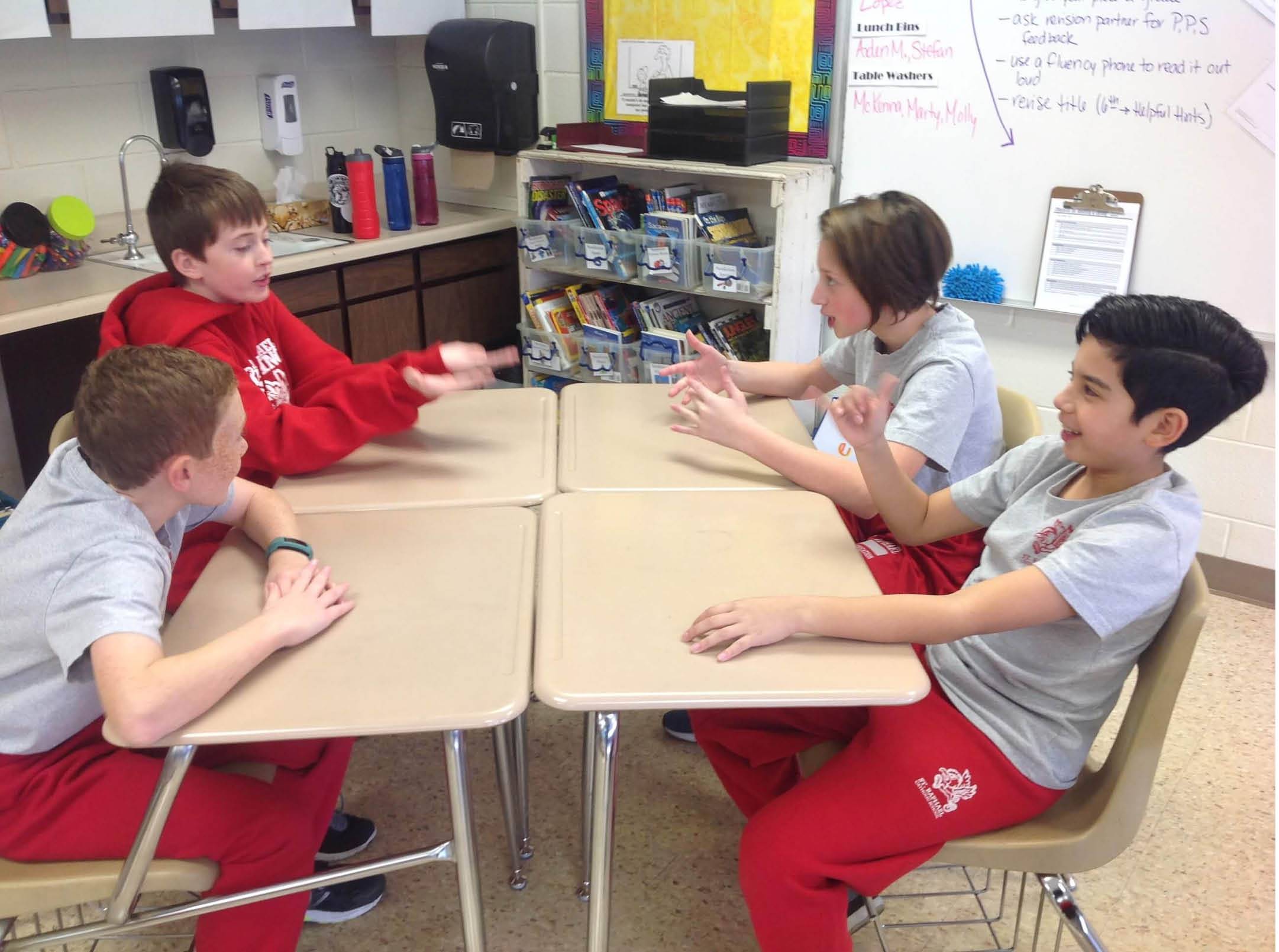
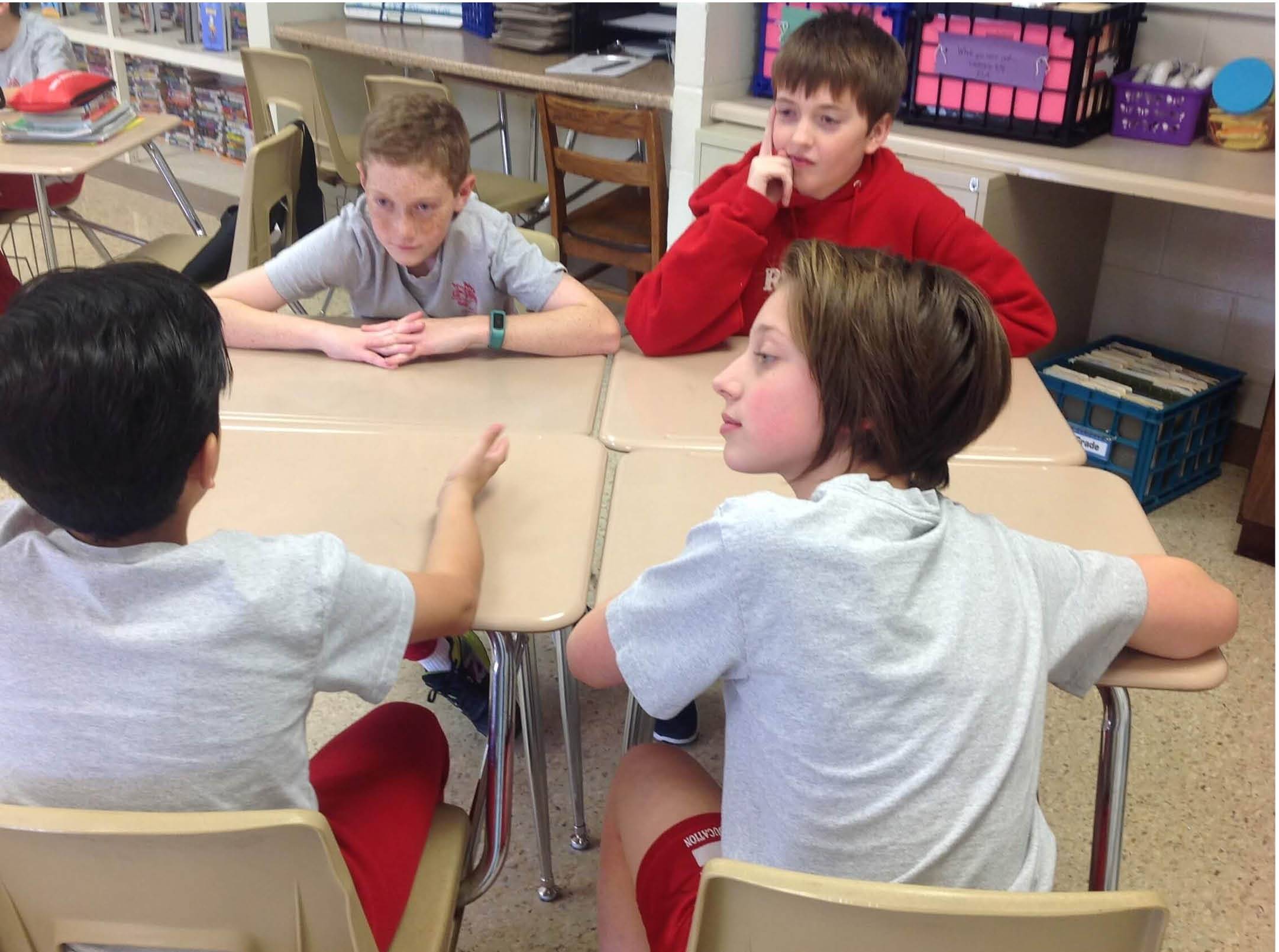
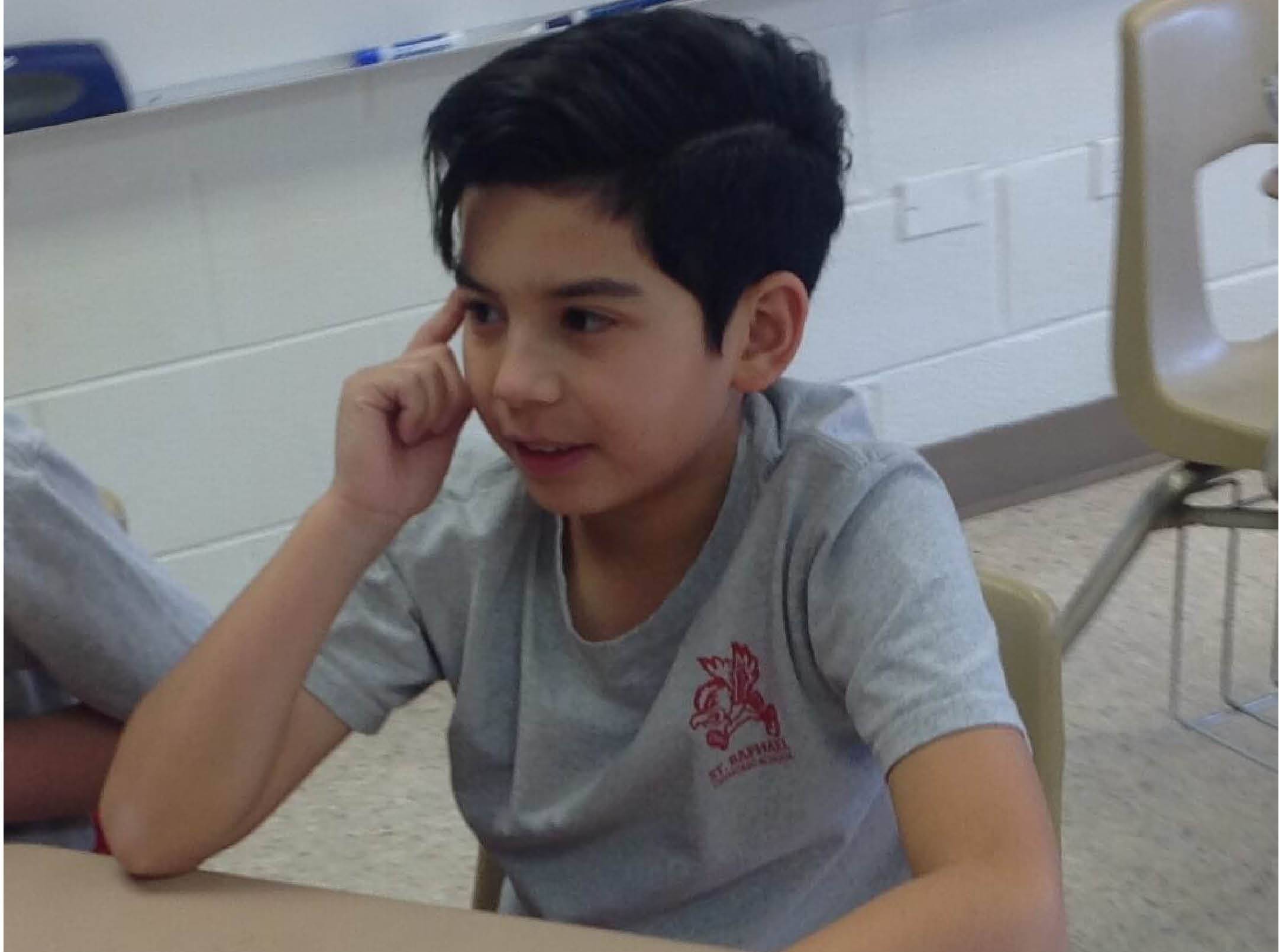
It’s possible that you won’t use all of these Talk Moves; it’s also possible you’ll need to invent some new ones. That’s what Victoria Studer found herself doing with her ELA sixth graders at St. Raphael Catholic School in Naperville, IL. She created two additional hand signals. Her students wanted a way to indicate when they didn’t hear the first answer and another signal for when they heard it but didn’t understand it. (This resulted in others communicating that they could clarify.)
- I can REPEAT: Students didn’t hear the original answer, thus they can’t agree, disagree, or add on. They need their peer to repeat the information.
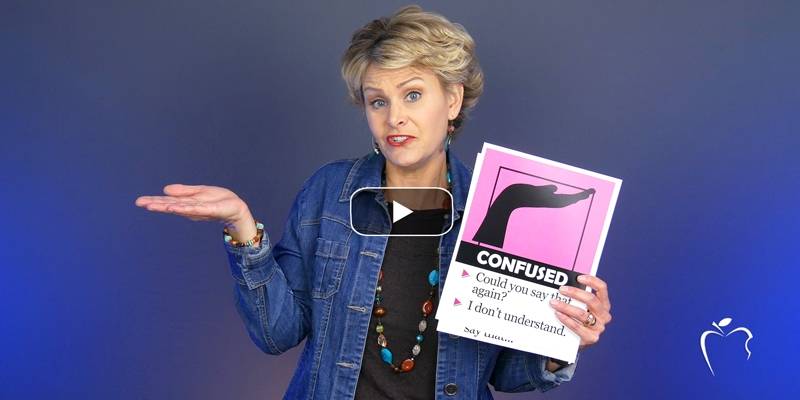
- I’m CONFUSED: Students signal when they are not understanding, in order for others to chime in with clarification.
Key into different learning styles
Master teacher Robert Hughes (Jeremiah Gray Elementary – Indianapolis, IN) shared the elementary’s art teacher is improving peer feedback with Talk Moves. Claire Dillehay created a song to help their younger students learn a few of the most frequently used Talk Moves. While the hand signals key into the bodily-kinesthetic learners, the song targets the musical-rhythmic students. Incorporating different learning styles increases students’ ability to give each other appropriate feedback.
Whether facilitating academic conversations in math, science, ELA, or social studies, Talk Moves are a powerful tool. They will transition your students from simply answering teacher questions in a one-way monologue to engaging with peers in a dialogue.
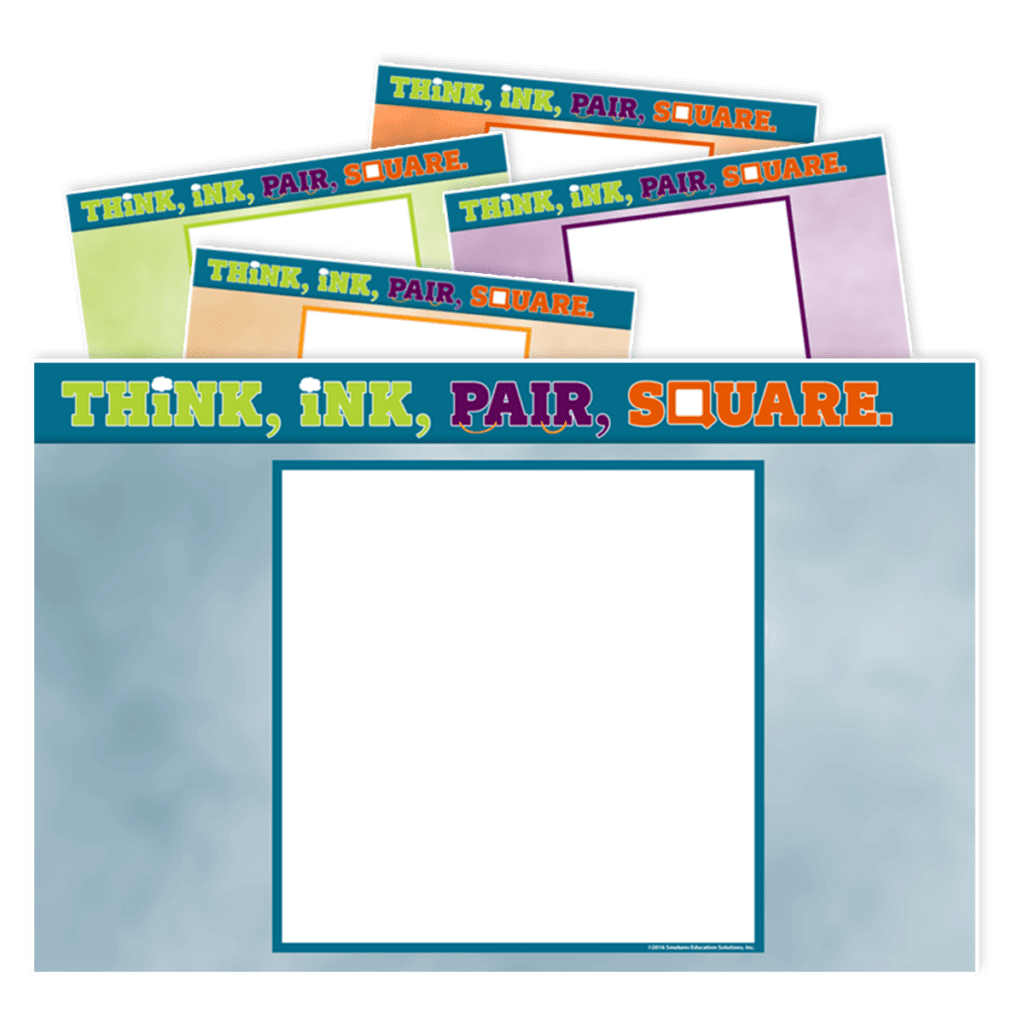
After a good classroom conversation, use Think, Ink, Pair, Square to help students process their thoughts.

[reading]
Enhance learning with active instruction
[reading]
Engage every student with ESRs
[reading]